

AI Character Sheet Generator: How to Build an 8-Panel Character Reference
Learn what makes an 8-panel AI character sheet reusable, when to choose it over a portrait anchor, and how to judge whether a sheet is strong enough to carry full-body continuity.
An AI character sheet generator matters when one face reference is not enough.
If the character has to stay recognizable as a full figure, the useful output is not just a pretty board. It is a structured 8-panel character sheet that can hold the same face, outfit, silhouette, and body proportions across multiple panels.
One way to generate that format inside MaxVideoAI is with Consistent Character AI.
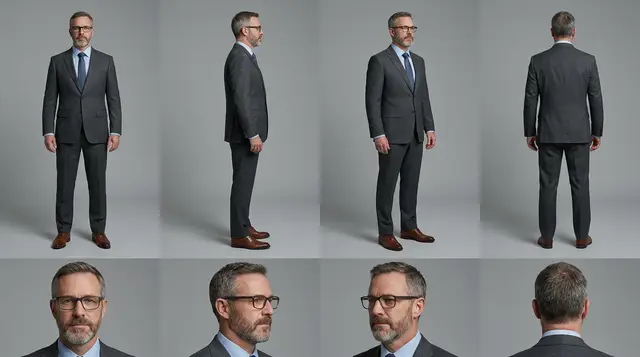
A useful sheet is not a vague turnaround. It is an 8-panel asset with four full-body angles and four matching close-ups.
What makes a strong 8-panel character sheet
A useful AI character sheet should do more than look organized on a page. It should preserve the details that usually drift first:
- face shape and hairstyle
- outfit silhouette
- accessories
- body proportions
- distinctive identity cues
In practice, a strong 8-panel character sheet should give you:
- four full-body angles
- four matching close-ups
That gives you both the broad structural read of the character and the tighter facial read in one asset. The best sheets are not random variety. They are controlled coverage.
The most reusable sheets usually have six qualities:
- stable face across close-ups so the head still reads like the same person from panel to panel
- matching outfit across body views so wardrobe does not quietly mutate when you need a wider shot
- readable silhouette so the body shape and clothing outline stay recognizable at a glance
- consistent body proportions so the character does not get taller, narrower, or bulkier from one angle to the next
- structured angle coverage so the panels feel like a reference set, not eight unrelated variations
- visible identity cues such as hairstyle, accessories, facial structure, or signature clothing details that remain legible across the sheet
One more test matters: the close-ups should clearly belong to the same character as the body panels. If the face board and the turnaround board feel like two different people, the sheet is not doing its job.
That is what makes the sheet reusable. It should let you look at the board and understand one character clearly, not eight loosely related interpretations.
What kind of starting material works best
The sheet quality depends on the clarity of the character brief. Before you generate the sheet, make sure you can answer four simple questions:
- What face structure or identity cues must stay fixed?
- What outfit or wardrobe details must survive wider shots?
- What silhouette should remain readable at a glance?
- What accessories, hairstyle, or signature elements cannot disappear?
Then choose the lightest starting material that still answers those questions.
Use one identity photo when face likeness matters most and the outfit does not need a separate style cue.
Add one outfit or wardrobe reference when clothing continuity matters and the body panels need to preserve a specific silhouette.
Use one trusted prior render when you already have an image that captures the right identity but need a more structured board around it.
Use one scratch-built concept when the character is not based on a real person and the goal is to define a fictional design consistently from the start.
You can start from:
- one identity photo
- one identity image plus a separate outfit reference
- one scratch-built character concept
The clearer that starting direction is, the more likely the panel set will hold together structurally. A good sheet does not need a complicated prompt. It needs a clear character to describe.
What makes a weak or unusable sheet
Some sheets look visually interesting but still fail as reference assets.
The most common failure modes are:
- the panels drift too much from each other
- the outfit changes between views
- the close-ups do not really match the body views
- the sheet has angle variety, but not identity stability
- the face is consistent, but the body shape keeps changing
- the board feels like eight stylish outputs instead of one structured character reference
The easiest mistake to make is confusing variety with coverage. A strong sheet is not trying to show eight different moods. It is trying to prove that one character survives multiple views.
That is the difference between a sheet that is decorative and a sheet that is useful. A reusable sheet should reduce decision-making later. A weak sheet creates more of it.
How to tell whether the sheet is ready to reuse
Before you move the character into prompts, edits, boards, or motion prep, check the sheet quickly:
- do the four close-ups still feel like the same person without reading the caption?
- do the body panels keep the same wardrobe logic instead of improvising it?
- does the silhouette still read if you zoom out?
- do the close-ups clearly match the body panels instead of feeling like a second interpretation?
- would another teammate understand the character from the board alone?
If the answer is no, the sheet is not ready yet. Generate again before you start building scenes on top of it.
When to use a full sheet instead of a portrait anchor
This is the key format decision.
Use a portrait anchor when:
- face identity is the main risk
- framing will stay tighter
- you need a faster reference for prompts or close-up edits
- speed matters more than full-body coverage
- close-ups matter more than body continuity
Use an 8-panel character sheet when:
- body shape matters
- outfit consistency matters
- you need a broader reusable reference
- you plan to create many scene types
- you want one asset that can keep traveling downstream
- one broad reusable asset is more useful than one tight face reference
| Choose | Best when | What it protects |
|---|---|---|
| Portrait anchor | close-ups, face-led prompts, faster iteration | facial identity |
| 8-panel sheet | wider scenes, boards, edits, motion prep | face, outfit, silhouette, and body read |

The portrait anchor is the tighter identity asset. The 8-panel sheet is the broader structural asset.
The simplest rule is:
- use a portrait anchor when the main continuity risk is the face
- use an 8-panel sheet when the continuity risk includes body, outfit, and silhouette
What makes a full sheet worth the extra structure
An 8-panel sheet becomes worth it when one broad reference is more useful than one tight face anchor.
That usually happens when the character has to move between:
- later image prompts that need wider framing
- image edits and scene variations
- storyboard and previs work
- recurring campaign or series assets
- motion prep where the body and outfit need to stay readable
The sheet is valuable because it keeps more of the character locked at once: face, outfit, silhouette, and broad body read. That extra structure is what makes it better for teams that need the same character to survive more than one scene.
When a full sheet is too much
You do not always need the full 8-panel structure.
A sheet may be more than you need when:
- you only need one close-up
- you only need one poster or hero image
- you are still in early mood exploration
- body and outfit continuity do not matter yet
- the main issue is just facial recognition, not full-character reuse
In those cases, a portrait anchor may be the better asset because it is lighter and faster while still protecting the part of identity that matters most.
Why a sheet beats a looser reference board
A loose mood board can look appealing without being very reusable.
A full sheet is stronger when you need:
- one board that answers the same character question from more than one angle
- a clean handoff to another teammate or workflow
- full-body and close-up continuity in the same asset
- something more structured than one portrait or one collage of variations
That is the real advantage of the format: one board can answer continuity questions that would otherwise keep coming back.
Final takeaway
An AI character sheet generator should not stop at “nice board layout.” It should generate an asset you can keep using after the board is done.
Use the 8-panel character sheet when one face reference is not enough to carry body, outfit, and continuity across scenes.
If what you need is a broad reusable reference, start with the 8-panel sheet.
In MaxVideoAI, you can generate that format directly in Consistent Character AI.
If you want the broader workflow around consistency, prompts, and video prep, read How to Create Consistent AI Characters Across Images and Video.