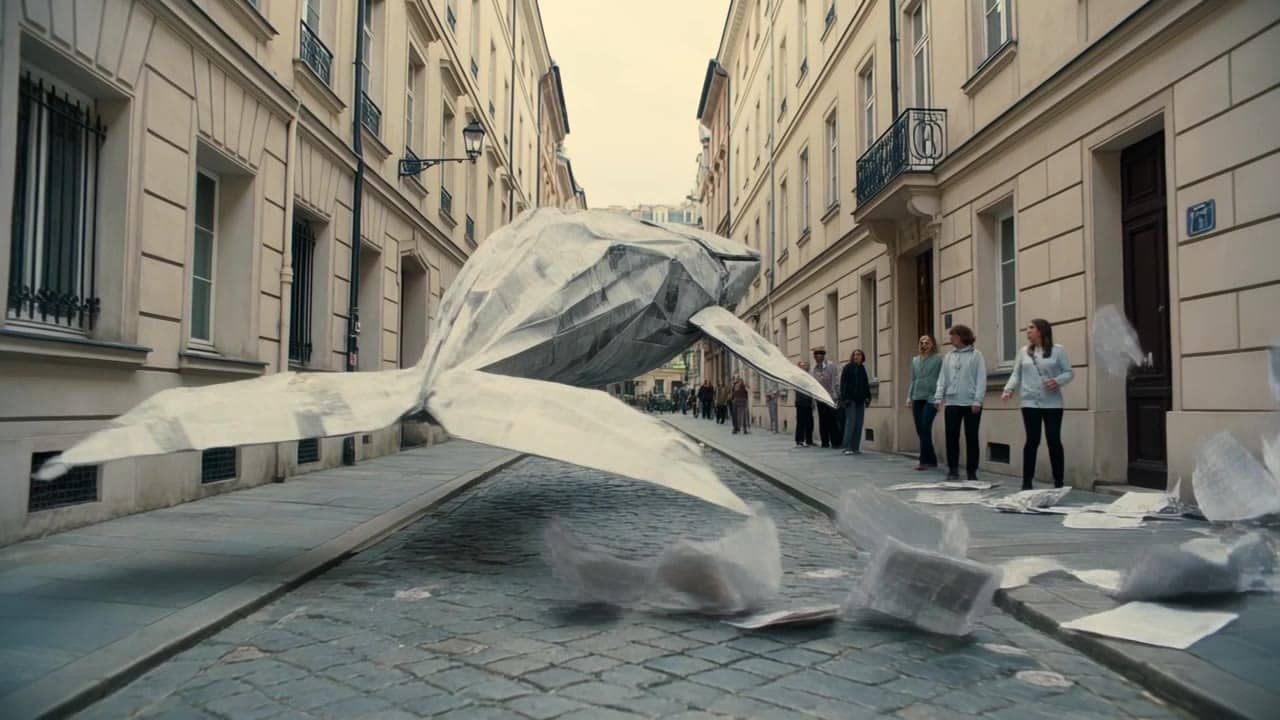
Entry draft
$0.55
5s · 1080p · audio off
KLING 3.0 OMNI STANDARD
Lower-cost reference-to-video, storyboard drafts and source-video V2V before moving approved directions into O3 Pro.
Use Kling 3.0 Omni Standard for cheaper reference-guided iteration: storyboard images, style anchors, optional start/end frames and source-video V2V tests. Move winners into O3 Pro when the shot needs stronger final polish.

Kling 3.0 Omni Standard example
Lower-cost storyboard draft
Reference images
Use @Image anchors for style, subject, storyboard or scene continuity without forcing the first image to open.
Source-video V2V
Attach a source video and refer to @Video1 when motion, pacing or camera language should guide the shot.
Optional start/end frames
Combine references with opening or ending frames when the shot needs stronger structure.
Native audio route
Generate with audio when the selected O3 route exposes audio controls.
Up to 15s
Use Pro for longer reference-guided clips before moving final 4K work to the 4K route.
Live quote
The app shows the exact price before generation.
Lower-cost preset totals for reference-guided drafts and source-video V2V tests.
$0.55
5s · 1080p · audio off
$1.32
8s · 1080p · audio on
$2.46
Most popular15s · 1080p · audio on
15s
Up to 1080p
All prices are MaxVideoAI display prices in USD credits for preset scenarios.
Review lower-cost storyboard, reference-image, and source-video V2V examples before moving approved shots into Pro or 4K. Standard is the O3 route for testing visual guidance without forcing the first uploaded image to become the opening frame.
See what's possible with Kling 3.0 Omni Standard for lower-cost reference-guided video.
Jump into the app with one click and reuse the setup.
Dialogue, ambience and SFX generated in sync.
Keep characters, style and scene consistency across sequences.
Built-in guardrails and safety filters for responsible review.
Use Standard for lower-cost reference and V2V tests. Move to Pro when the selected direction needs final-quality fidelity.
Use O3 Pro or Standard for source-video V2V. Prompt with @Video1 when the source clip should control motion or camera continuity.
Use O3 4K after the reference direction is approved. Stay on Pro while testing source-video V2V and storyboard structure.
Use text when no visual anchor is needed and O3 should generate from the scene brief.
Use @Image1, @Image2 and more for character, object, style or storyboard guidance.
Add optional opening or ending frames when the first or last pose must be controlled.
Use @Video1 for video-to-video motion, pacing, composition or camera continuity.
Combine source video and reference images when motion and visual identity both matter.
Use this to validate an idea cheaply without assets.
Subject:
[Character / product / place + 2 visual traits]

Action:
[One readable action or 2-3 short beats]

Camera:
[Camera move + framing + continuity]

Style:
[Lighting, texture, palette, cinematic look]

Audio:
[Native ambience, short SFX, brief dialogue if useful]
A designer crosses a night studio holding a glowing prototype. Camera: low tracking shot into a slight push-in. Style: blue reflections, brushed metal, premium finish. Audio: studio ambience, subtle electric hum, no subtitles.
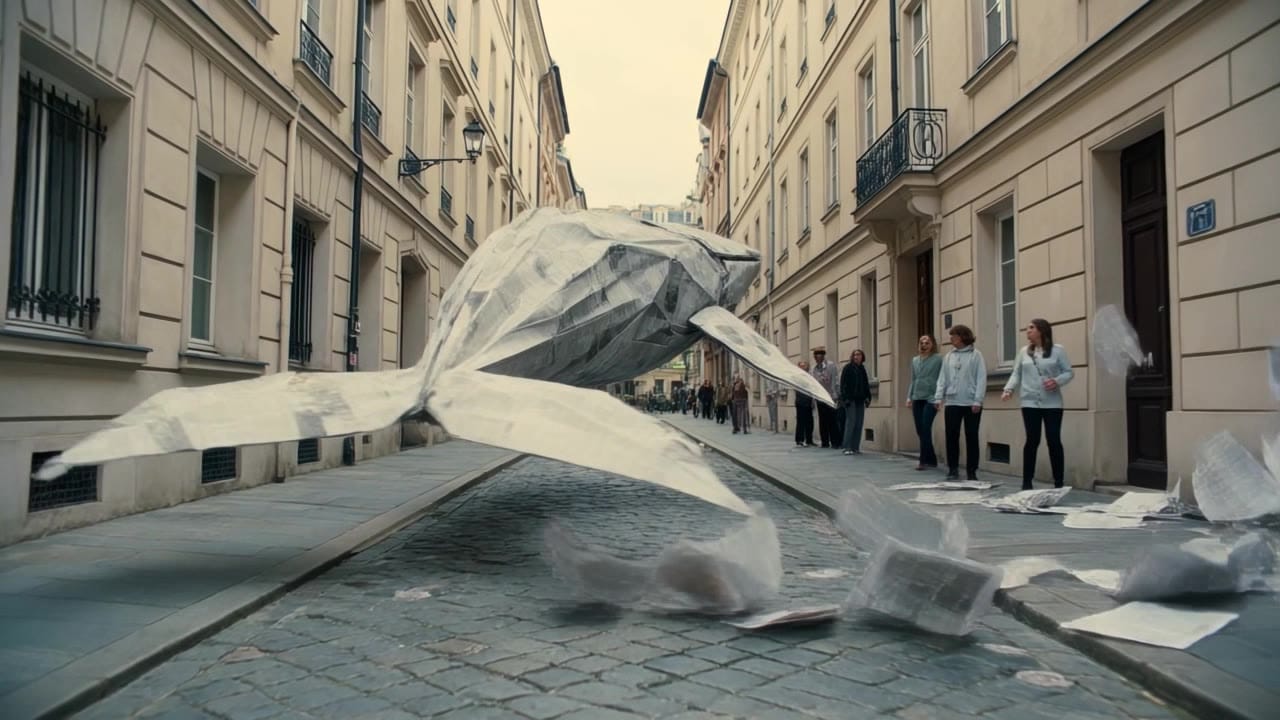
Subject: Giant origami whale made of folded newspaper • Action: Glides through a dry European street and lifts loose paper
Camera: Low wide tracking shot alongside the whale • Style: Cinematic magical realism, soft light, paper textures
Audio: Paper rustle, distant city ambience, gentle wind
Subject:
A giant origami whale made of folded newspaper, gliding through a dry European street like it is swimming underwater.

Action:
The paper whale passes between buildings, creating a wave of loose paper. People step back in surprise as the whale’s tail gently sweeps newspapers into the air.

Camera:
Low wide tracking shot moving alongside the whale, keeping the full body readable. Smooth forward motion, no sudden cuts.

Style:
Cinematic magical realism, soft afternoon light, paper textures, muted beige and blue-gray palette, elegant surreal mood, realistic city with a poetic fantasy element.

Audio:
Soft paper rustling, distant city ambience, deep whale-like paper creak, gentle wind swell.
Best practices, common fixes, and important limitations to help you get the strongest results with Kling 3.0 Omni Standard for lower-cost reference-guided video.
These side-by-side comparisons break down price, resolution, audio, speed, and motion style so you can pick the right engine fast.
Each page includes real outputs and practical best-use cases.
Move to Pro when the draft needs stronger storyboard continuity, source-video V2V, native audio, and more production-ready reference control.
Compare Standard vs Pro ->Use Kling 3 Standard when the uploaded image should visibly open the clip instead of acting as a detached reference or storyboard guide.
Open Kling 3 Standard ->Compare against Seedance when the decision is multi-shot continuity, native audio, and storyboard-to-video behavior across scenes.
Compare with Seedance 2.0 ->The limits that shape your renders.
Built-in safeguards and best practices for responsible creation with Kling 3.0 Omni Standard for lower-cost reference-guided video.
No. Kling 3 image-to-video is start-frame animation. Kling 3.0 Omni Standard reference-to-video is for references and storyboard guidance.
Yes. Standard supports source-video V2V with one 3-10 s clip referenced as @Video1, optional @Image references, and keep_audio when the original source audio should be preserved.